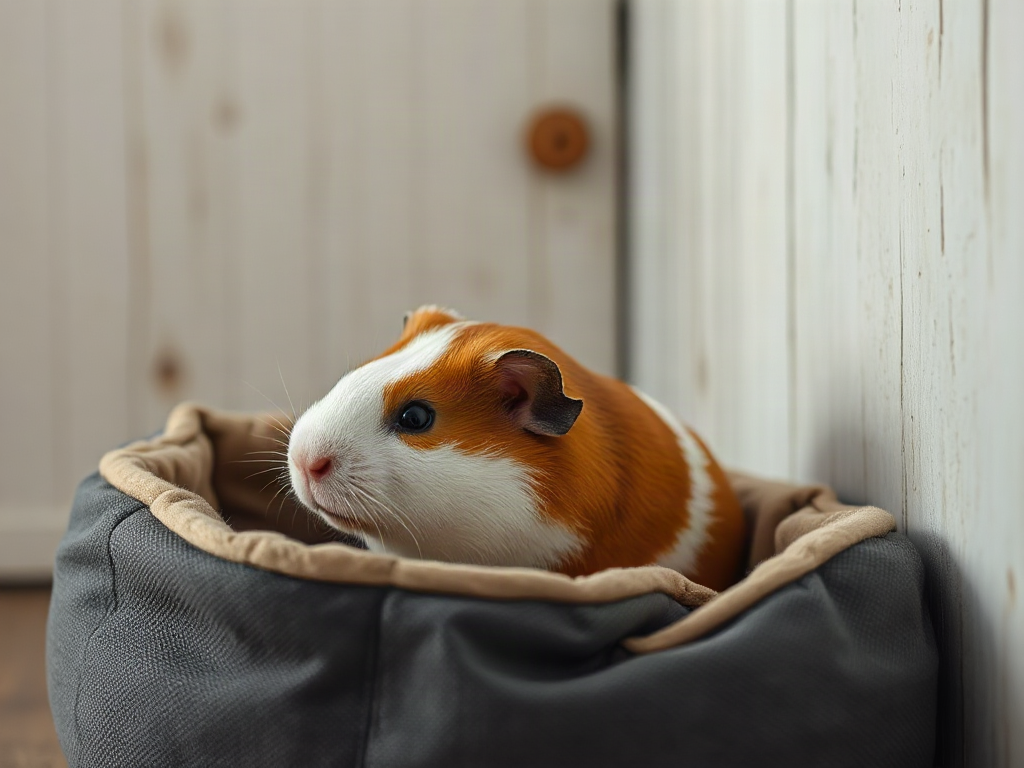
Quiet sleep areas and effective bed placement give small pets a sheltered resting spot without trapping them near noise, drafts, direct sun, or heavy household activity. Place the sleeping bed against a stable enclosure wall or in a protected room corner while preserving ventilation, clear exits, and access for cleaning. Separate it from wet litter, water-bottle drips, and heavily soiled toilet areas, but account for species-specific habits such as rabbits resting near hay. Watch where the animal voluntarily sleeps, then adjust the location if bedding stays damp, the pet avoids it, or nearby movement repeatedly interrupts rest.
What you’ll learn
This guide covers the following practical points:
- Recognizing a Suitable Sleep Location — A suitable sleep location combines shelter with awareness of the surrounding space.
- Placing the Bed Inside an Enclosure — Inside an enclosure, place the bed where it stays dry, stable, and easy to leave.
- Managing Room Noise, Light, and Temperature — The room location shapes the quality of a sleep area even when the enclosure layout is sound.
- Testing and Adjusting the Location — Bed placement should be tested through behavior and condition rather than judged by appearance.
Recognizing a Suitable Sleep Location
A suitable sleep location combines shelter with awareness of the surrounding space. Many small pets rest more readily beside a solid wall, beneath a suitable hide, or in another partially enclosed position than in the exposed center of an enclosure. The animal should still be able to enter, turn around, leave freely, and see or hear enough of its environment to avoid feeling trapped.
Quiet does not mean completely isolated. A back bedroom may offer little daytime disturbance, but it can be a poor choice if the pet receives less observation or if temperature and ventilation are inconsistent. A calm edge of a regularly occupied room often works better than either a busy walkway or a forgotten closed room. The useful distinction is between predictable background activity and abrupt disturbance from doors, speakers, vacuuming, children, or other animals.
Start by observing where the pet already chooses to settle. A guinea pig repeatedly sleeping beneath the same covered end of its habitat is giving useful placement information. A rabbit stretching beside a wall rather than entering a padded bed may prefer the cooler surface or the greater space. Do not assume that ignoring a purchased bed means the animal does not sleep comfortably; the shape, warmth, odor, entrance, or location may simply conflict with its preferences.
Placing the Bed Inside an Enclosure
Inside an enclosure, place the bed where it stays dry, stable, and easy to leave. A wall-side position usually reduces exposure and prevents the bed from becoming an obstacle in the middle of the usable floor. Keep entrances clear of exercise wheels, ramps, bowls, and narrow passages so another animal cannot block access.
Moisture should drive the final choice. Water bottles can drip, bowls can tip, and toilet corners can quickly dampen fabric or loose bedding. Allow enough separation to keep the sleeping surface clean without taking food or water out of comfortable reach. Species habits matter: rabbits commonly eat hay near their toilet area, so rearranging every resource merely to create maximum distance may make the habitat less functional. The priority is a dry resting surface, not an artificial layout rule.
Check these placement points before settling on a location:
- Stable base: The bed does not rock, fold over, or slide when entered.
- Open route: The pet has an unobstructed entrance and exit.
- Dry surroundings: Bedding is outside the usual splash, drip, and soiling zones.
- Safe edges: Straps, loose threads, foam, and damaged filling are not accessible for chewing.
- Cleaning access: The bed can be removed without dismantling the habitat.
A common mistake is forcing a large bed into a small habitat. If it crowds the toilet, feeding station, or exercise space, a compact sleep pad or species-appropriate hide may be more useful. Never block ventilation openings to make a sleeping corner darker or more enclosed.
Managing Room Noise, Light, and Temperature
The room location shapes the quality of a sleep area even when the enclosure layout is sound. Avoid placing the resting end directly beside a television, laundry appliance, frequently slammed door, or speaker. Intermittent vibration and sudden sound are usually more disruptive than steady, moderate household noise because the animal cannot anticipate when they will occur.
Light and heat can vary sharply within the same room. Direct sun through a window can warm a bed or enclosed hide even when the rest of the room feels comfortable. Heating vents, radiators, fireplaces, and portable heaters can create similarly concentrated hot spots, while exterior doors and air-conditioning outlets may produce drafts. Move the habitat away from these sources rather than attempting to compensate with extra bedding, which may retain more warmth without correcting the cause.
Other household animals create a different pressure. A dog staring into a guinea pig enclosure or a cat sitting on top of a small-animal habitat can make an otherwise quiet corner feel exposed. Use secure physical separation and prevent access rather than relying on apparent calm. If a pet suddenly stops using its sleeping place, check sightlines and recent household changes as well as the bed itself.
Nighttime activity also deserves consideration. Hamsters and some other small mammals may become active when people are trying to sleep, so a human bedroom may be quiet for the animal during the day but inconvenient at night. Choose a room where the pet’s natural activity does not lead to repeated relocation, light switching, or attempts to suppress normal movement.
Testing and Adjusting the Location
Bed placement should be tested through behavior and condition rather than judged by appearance. Leave a safe setup consistent long enough for the animal to investigate it without repeated rearrangement. Signs of a workable position include voluntary resting, normal entry and exit, dry bedding, relaxed postures appropriate to the species, and continued use when ordinary household activity occurs.
Failure signs are equally practical: persistent avoidance, repeated attempts to move the bed, dampness, concentrated chewing damage, crowding at the entrance, or frequent startling near the location. First change one variable. Move the bed away from the water source, rotate the entrance away from a walkway, or replace an overly warm design with a lighter resting surface. Changing the bed, room, cover, and enclosure layout simultaneously makes it difficult to identify the problem.
Animals sharing an enclosure may need more than one resting option. A single enclosed bed can become a contested resource or leave one animal without an easy exit. Provide multiple suitable shelters when required for the species and group, and watch for guarding, chasing, or one pet consistently being displaced. Compatibility and housing needs vary, so seek guidance from a veterinarian familiar with the species if social tension, unusual inactivity, appetite changes, breathing difficulty, or signs of overheating accompany altered sleep behavior.
Frequently Asked Questions
Should a small pet bed be placed in a dark corner?
A shaded or partially covered corner may feel protected, but it should retain airflow and a clear exit. Do not cover ventilation openings or create an enclosed space that can trap heat.
How far should the bed be from food and water?
No universal distance fits every enclosure. Keep the surface beyond normal water drips and heavy soiling while ensuring that food and water remain easy to reach without crowding passageways.
Why does my small pet sleep beside the bed instead of in it?
The bed may be too warm, exposed, cramped, unstable, or strongly scented. The pet may also prefer a flat surface or hide; observe its chosen location before changing one feature at a time.
Can I put a small pet habitat next to a window?
A window can produce direct sun, drafts, and rapid local temperature changes. A position farther inside the room is usually easier to keep stable while still allowing normal daylight.
Do bonded small pets need separate sleep areas?
Even compatible animals may benefit from multiple shelters or resting spots, especially if one guards an entrance. Each animal should be able to rest and leave without being trapped or displaced.
Conclusion
Prioritize a dry surface, an open escape route, stable room conditions, and protection from sudden disturbance. Use the pet’s chosen resting place as evidence rather than forcing a decorative layout, and alter one placement factor at a time when the bed is ignored. Recheck the setup after room changes, seasonal sunlight shifts, or the arrival of another animal. Persistent behavioral or physical changes warrant advice from a veterinarian familiar with the species.