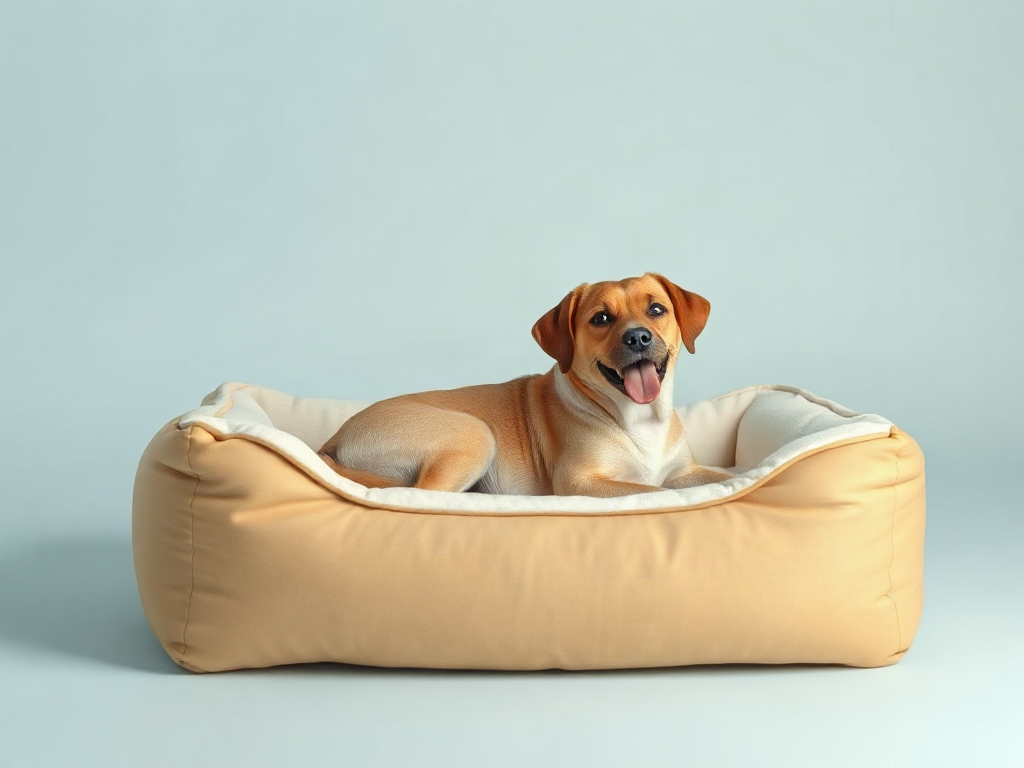
For hot sleepers, cooling pet bed materials perform best when they combine a breathable surface, limited heat-trapping fill, and airflow beneath or around the sleeping area. Open-weave mesh and elevated fabric cots release warmth continuously, while gel pads initially feel colder but may warm during prolonged contact. Cotton canvas and thin technical knits offer a useful middle ground when paired with ventilated foam or a low-profile insert. Choose according to the pet’s species, chewing habits, preferred sleeping position, and room conditions rather than relying on a “cooling” label alone.
How Do Cooling Materials Manage a Pet’s Heat?
A bed feels cool only while it can move heat away from the animal faster than the sleeping surface accumulates it. Surface texture matters, but the layers beneath that surface often determine whether the effect lasts for five minutes or through a long nap. Dense foam, thick synthetic batting, deep bolsters, and plush fleece can retain body warmth even when the outer fabric is advertised as breathable.
Airflow is the most dependable passive cooling mechanism. An elevated cot stretches woven fabric or mesh above the floor, allowing room air to circulate underneath. A flat pad can also release heat if it uses a thin, permeable cover and does not sit on heat-holding carpet. By contrast, placing a breathable pad inside a close-sided hideaway limits air exchange. That tradeoff matters for small animals that value enclosure but sleep hot: a shaded bed with one open side may be more comfortable than a fully enclosed cave during warm weather.
Conduction creates the immediate cool sensation associated with gel pads, stone slabs, and smooth surfaces. Heat flows from the warmer body into the cooler material. The effect diminishes as the surface approaches body temperature, especially in a warm room without air movement. A gel insert can therefore feel noticeably cooler at first without remaining the coolest choice over several hours. It should not be assumed to refrigerate itself or lower the surrounding temperature.
Moisture handling also affects comfort. A fabric that spreads small amounts of moisture across a wider area may dry faster than thick pile, but a damp bed is not automatically a safe cooling tool. Humidity, urine, spilled water, and condensation can leave padding clammy and encourage odor or material breakdown. Removable, washable covers are valuable because they let the owner restore a dry sleeping surface without discarding the entire bed.
Watch the pet rather than judging by touch alone. A useful material usually corresponds with relaxed posture, longer uninterrupted rest, and less repeated movement between the bed and a bare floor. Persistent panting, unusual lethargy, weakness, drooling, or distress should not be treated as a bedding problem; move the animal to an appropriate cooler setting and seek veterinary advice promptly when overheating is suspected.
Cooling Materials Compared by Performance and Tradeoffs
No single material leads every category. Mesh maximizes ventilation, gel provides an immediate cool touch, and natural woven fabrics balance familiarity with easier laundering. Foam type, cover thickness, room temperature, and the surface under the bed can change the result as much as the named material.
| Material or surface | Primary cooling action | Best suited to | Main limitation |
|---|---|---|---|
| Open-weave mesh | Air circulation above and below | Warm rooms and pets that sprawl | May feel firm; claws can damage weak mesh |
| Cotton canvas | Moderate breathability with low pile | Pets that prefer a familiar fabric surface | Absorbs moisture and must dry fully |
| Technical knit or spacer fabric | Creates small air channels near the body | Flat pads needing cushioning without plush pile | Performance varies with weave and backing |
| Gel insert | Draws heat into a cooler thermal mass | Short resting periods and supervised use | Warms with contact; puncture risk matters |
| Perforated or convoluted foam | Allows more internal airflow than a solid slab | Pets needing some pressure relief | Still retains more heat than a mesh cot |
| Stone or ceramic resting tile | Conducts heat into a cool, dense surface | Animals that voluntarily choose hard flooring | No cushioning and potentially slippery |
Open-weave mesh is often the strongest choice when continuous heat release is the priority. Look for a taut sleeping panel, smooth edges, stable legs, and openings that cannot catch toes or nails. A cot that flexes deeply can bring the animal close to the warm floor and may be difficult for a small, older, or mobility-limited pet to enter. Mesh is also less suitable for habitual diggers unless the fabric and seams tolerate repeated scratching.
Cotton canvas is less airy than mesh but usually cooler than faux fur, sherpa, or thick microfiber. Its low pile does not surround the body with insulating fibers, and many covers can be washed. Cotton’s weakness is moisture retention. After laundering or an accident, the cover and inner fill need to become completely dry before reuse. A waterproof backing protects the core but can reduce vapor movement, so a cover described as breathable on top may still trap heat against an impermeable underside.
Gel products deserve careful inspection rather than automatic rejection or preference. A sealed gel pad may be convenient for a pet that lies down briefly after activity, but punctured or leaking inserts should be removed from use. Owners of chewers should favor inaccessible inserts or non-gel alternatives. A common purchasing mistake is choosing the coldest-feeling sample in a store; sustained ventilation is usually more relevant for an animal that remains in one position through the night.
Which Bed Construction Works Best for a Hot Sleeper?
Construction should match both the animal’s resting style and the room where the bed will be used. A thin cover over a heat-trapping core will not remain cool, while a highly ventilated cot may go unused if it feels unstable or offers no edge for a pet that prefers to curl up. The practical goal is sufficient air movement without sacrificing secure footing, accessible entry, or necessary cushioning.
For a pet that sprawls on tile, begin with a low-profile design rather than a deep nest. A taut mesh cot is appropriate when the animal climbs safely and enjoys a firm surface. A cotton-covered pad with a thin ventilated core is a gentler transition for a pet reluctant to leave the floor. Place either option away from direct sun, radiators, appliances, and stagnant corners. Even a well-designed bed cannot compensate for a hot, poorly ventilated room.
Bolsters create a more complicated choice. They can provide a boundary for curling and head support, but a full ring blocks cross-breezes and places insulation against the torso. A bed with one low bolster or a partially open perimeter preserves some sense of enclosure while providing an escape route for heat. For rabbits, guinea pigs, and other small pets, construction must also account for species-appropriate chewing behavior, foot protection, enclosure layout, and supervision. Materials that are acceptable for one animal should not be assumed suitable for another.
Cushioning needs can outweigh maximum cooling. An older pet or an animal with mobility concerns may avoid hard tile despite seeking a cooler surface. In that situation, a ventilated foam core with a smooth, thin cover may offer a workable compromise. Perforations and contoured channels can reduce the amount of solid foam directly beneath the body, but they do not make foam equivalent to open mesh. Thick memory foam tends to conform around the body and may retain more warmth than a firmer, shallower layer.
Use a short priority check before buying:
- Fit: The pet should be able to stretch out without hanging over insulated sides.
- Air path: Check whether air can move under, through, or across the sleeping surface.
- Surface security: Avoid slippery covers, exposed fasteners, unstable frames, and openings that could catch feet.
- Material access: Chewers should not be able to reach gel, foam, loose fibers, or damaged seams.
- Cleaning: Confirm that the cover can be removed and that every layer can dry thoroughly.
The strongest option is the one the pet consistently chooses without showing signs of discomfort. If the animal repeatedly abandons the bed for a nearby hard floor, first remove blankets or plush toppers, improve placement, and verify that the sleeping panel is not sagging. Buying a colder insert before correcting those basic issues often adds complexity without solving the heat buildup.
How Should You Test, Clean, and Replace a Cooling Bed?
A cooling bed should be evaluated over several normal rest periods, not from a momentary hand test. Human skin detects an initially cool surface, but it does not reveal how the bed behaves under sustained body contact. Set the new bed beside the pet’s established resting area so the animal can choose freely, and avoid forcing prolonged contact. Voluntary use provides a clearer indication of comfort than repeatedly returning the pet to the bed.
During the test, note where and how the animal settles. Relaxed stretching, normal sleep, and fewer moves to bare flooring suggest the design is releasing heat adequately. Frequent repositioning, sleeping only on the edge, avoiding the central cushion, or choosing the floor soon after lying down can indicate trapped warmth, excessive softness, an unstable frame, an unpleasant texture, or poor placement. Preference is not proof of temperature alone, so change one variable at a time. Removing a fleece cover before replacing the entire bed makes the result easier to interpret.
Cleaning can either preserve or undermine cooling performance. Hair and debris can clog mesh openings, while detergent residue may stiffen fibers or irritate sensitive skin. Follow the manufacturer’s care instructions, use a cleaning method appropriate to the material, rinse thoroughly, and inspect the underside as well as the visible surface. Waterproof liners should be wiped at seams and folds, where moisture can remain hidden. Do not reassemble foam, covers, or inserts until each layer is dry.
Damage changes the safety calculation. Retire or repair a bed when mesh has widened holes, a frame wobbles, seams expose fill, foam crumbles, or a gel insert leaks or bulges. A pet that begins chewing a previously ignored edge should no longer have unsupervised access until the cause and damage are assessed. Cooling performance is irrelevant if the structure creates an entrapment, ingestion, or fall hazard.
Seasonal adjustments are usually more useful than maintaining one configuration all year. In hot weather, remove thick toppers and position the bed where room air can circulate. When temperatures fall, add only a light, removable layer if the pet seeks warmth, leaving part of the cooling surface uncovered so it can choose. Continued avoidance despite cleaning, repositioning, and simplifying the layers is a reasonable sign that the material or construction does not suit that particular sleeper.
Frequently Asked Questions
Is mesh cooler than a gel pet bed?
Mesh usually provides more consistent passive cooling because air keeps moving around the sleeping surface. Gel may feel colder initially, but it absorbs body heat and can warm during extended contact.
Does memory foam make a pet bed hot?
Dense memory foam can retain warmth because it conforms closely around the body and restricts airflow. A thinner, perforated core with a breathable cover may feel less warm, although it will not ventilate like an elevated mesh cot.
Are cooling gel beds safe for pets that chew?
A chew-damaged gel pad should not remain accessible. Choose a design with an inaccessible insert or use a non-gel alternative, and remove any product that leaks, bulges, or has exposed seams.
Can I put a blanket on a cooling bed?
A thick or plush blanket can block airflow and insulate the pet from the cooling surface. If a covering is needed, try a thin, breathable, washable layer and leave part of the surface uncovered.
Why does my pet still sleep on the floor?
The floor may be firmer, cooler, more stable, or better positioned. Check for deep cushioning, warm covers, direct sunlight, frame movement, high entry points, or a texture the animal dislikes before replacing the bed.
Conclusion
Material labels matter less than the complete route heat must take away from a resting animal. Prioritize open airflow for pets that sprawl and remain in place for long periods, then add only as much cushioning or enclosure as the pet genuinely needs. Mesh cots offer sustained ventilation, low-pile woven covers provide a familiar compromise, and gel inserts are better treated as short-duration heat sinks than self-cooling systems.
Before buying, inspect the core, backing, seams, frame, cleaning requirements, and access to chewable components. Test the bed beside an established resting spot and use voluntary behavior—rather than a quick touch test—to judge the result. If the pet avoids the center, repeatedly moves to the floor, or appears distressed, simplify the bedding, improve room conditions, and reassess. Bedding can improve thermal comfort, but it cannot make an overheated environment safe.