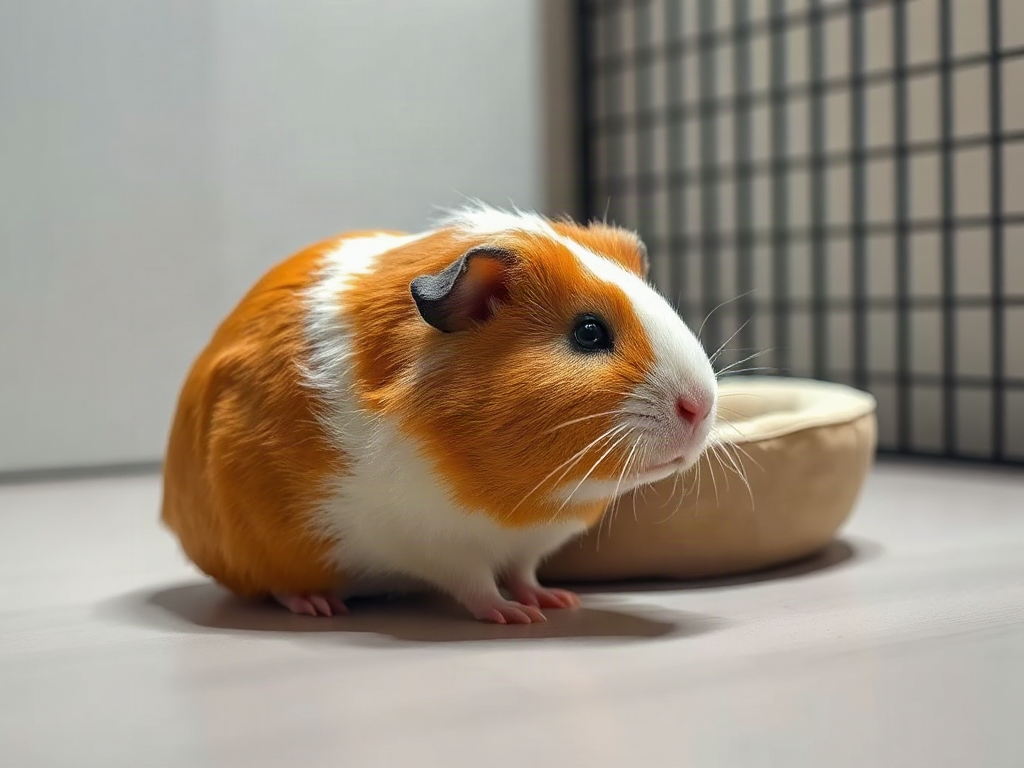
Low-rise bedding can reduce small-animal falls by keeping the sleeping surface close to the enclosure floor and removing difficult edges from the entry path. The safest layout pairs a low, stable cushion with a shallow entrance, firm footing, and enough open space for an animal to turn without climbing. Thick bolsters, loose ramps, compressible filling, and raised platforms can create unexpected height or unstable transitions. Match the design to the animal’s size, mobility, and chewing habits, then watch several entries and exits to confirm that paws do not slip, catch, or drop abruptly.
What you’ll learn
This guide covers the following practical points:
- How Low-Rise Design Reduces Fall Risk — A sleeping area becomes harder to enter when its usable surface sits above an animal’s comfortable step height.
- Choose Stable Materials and Entry Shapes — Stability matters as much as height because a low surface can still cause a misstep if it slides, rolls, or folds.
- Set Up and Monitor the Sleeping Area — Floor-level placement is usually the simplest arrangement because it avoids adding a platform beneath an otherwise suitable bed.
How Low-Rise Design Reduces Fall Risk
A sleeping area becomes harder to enter when its usable surface sits above an animal’s comfortable step height. The challenge may come from a tall outer wall, an overfilled cushion, a platform underneath the bedding, or a soft edge that collapses under the front paws. An animal can appear to climb in successfully yet stumble when leaving because the drop is less visible from inside the bed.
Low-rise design reduces that transition rather than trying to cushion a fall after it happens. Look at the complete route from the enclosure floor to the resting surface. A bed with a thin base but a high doorway is not functionally low, while a moderately padded mat with one shallow, firm entrance may be easier to use. The entrance should remain low after the filling expands, shifts, or bunches during normal use.
Species and individual movement patterns matter. A healthy rabbit may hop over an edge that presents a barrier to an older guinea pig, while a hamster may burrow beneath loose bedding and alter the apparent height of its sleeping area. Animals with weakness, poor balance, painful movement, recent injury, or sudden reluctance to climb need veterinary assessment; changing the bed should not be treated as a diagnosis or substitute for care.
A practical check is to observe the animal from floor level. Watch whether it pauses before entering, pulls itself over the rim, lands heavily, or avoids a particular side. These behaviors do not prove an injury, but they show that the route deserves adjustment. The common mistake is judging height from above, where a small ledge can look insignificant even though it reaches the animal’s chest.
Choose Stable Materials and Entry Shapes
Stability matters as much as height because a low surface can still cause a misstep if it slides, rolls, or folds. A broad base with restrained padding generally offers a more predictable landing than a narrow cushion with deep, shifting fill. Place pressure on the entrance with two fingers: if the edge flips, sinks sharply, or exposes a hard seam, it may not provide consistent footing.
Choose an entrance shape that creates a clear route rather than surrounding the animal with equal-height walls. A flat mat offers the lowest access, but it provides little enclosure for animals that prefer a sheltered resting place. A shallow-sided bed with a cut-down doorway offers more containment, provided the doorway does not collapse inward. Tunnel-style bedding can work for animals that move confidently through it, but rigid or elevated tunnel entrances may be unsuitable for limited mobility.
| Design | Useful When | Check Before Use |
|---|---|---|
| Flat padded mat | Minimal step-up is the priority | Edges stay flat and the mat does not slide |
| Shallow-sided bed | Some body support or nesting space is wanted | At least one entrance remains low and firm |
| Floor-level hide with liner | The animal seeks cover | The doorway has no lip, hard track, or loose ramp |
Fabric and fill also affect safety. Avoid exposed loops that can catch nails, loose threads that invite chewing, and stuffing that becomes lumpy enough to create a slope. A washable cover is useful only if it returns to a flat, secure fit after laundering. Do not add improvised foam blocks or folded towels beneath a bed without checking the result; layers can separate, increase the drop, and create chewable edges.
Set Up and Monitor the Sleeping Area
Floor-level placement is usually the simplest arrangement because it avoids adding a platform beneath an otherwise suitable bed. Position the entrance toward an open, uncluttered part of the enclosure, not against a bowl, tunnel, wire edge, or hard accessory. The animal should be able to approach, turn, and leave without stepping across another object.
Use this compact setup check before leaving the bedding in regular use:
- Press the base: confirm that it does not rock, roll, or skate across the floor.
- Trace the route: remove raised thresholds and abrupt transitions around the entrance.
- Check the interior: flatten bunched fill and verify that the animal cannot become wedged behind a bolster.
- Observe use: watch several entries and exits rather than assuming acceptance means easy access.
- Recheck after cleaning: covers, padding, and fasteners may sit differently after washing.
Signs of a workable setup include smooth entry without pulling over the rim, controlled exits, stable bedding, and continued normal use of the surrounding enclosure. Warning signs include repeated slipping, hesitation, tumbling from the doorway, trapped feet, chewing that exposes fill, or bedding that migrates toward a ledge. Remove or reconfigure the product if it creates an immediate hazard.
Do not rely on a steep ramp to rescue a bed that is unnecessarily high. A ramp consumes floor space, may shift, and can create a second transition at its upper end. If a small rise cannot be avoided, a broad, securely anchored approach with reliable traction is preferable to a narrow improvised incline. Animals with a new change in balance or movement should be evaluated by a veterinarian even if a lower bed appears to help.
Frequently Asked Questions
How low should bedding for a small animal be?
There is no universal safe height because body size, species, age, and mobility differ. Choose the lowest practical entrance that the animal can cross without jumping, pulling itself over an edge, or dropping on exit.
Is a flat mat safer than a bed with sides?
A flat mat removes most entry barriers, but a shallow-sided bed may offer more nesting support. The safer choice is the one that stays stable, has a clear low entrance, and suits the animal’s normal movement.
Can I place a towel under the bed to stop sliding?
Only if the towel remains flat, cannot be pulled into loose folds, and is appropriate for the animal’s chewing behavior. A fitted nonslip base is usually more predictable than unsecured layers.
Should low-rise bedding still have soft padding?
Padding can be comfortable, but excessive or shifting fill may raise the surface and destabilize footing. Favor even cushioning that recovers its shape without creating deep hollows or steep edges.
When does difficulty entering a bed require veterinary attention?
Seek veterinary advice for sudden reluctance to move, repeated falls, weakness, limping, pain-like behavior, or a persistent change in balance. A lower bed may reduce an obstacle but cannot identify the underlying cause.
Conclusion
Prioritize the entire entry and exit route, not the product label or cushion thickness alone. Select a floor-level, stable design with a shallow opening, secure fabric, and fill that stays even. Test it after setup and every wash, then observe how the animal actually moves across the edge. Persistent hesitation, slipping, or altered mobility warrants more than another bedding adjustment and should be discussed with a veterinarian.