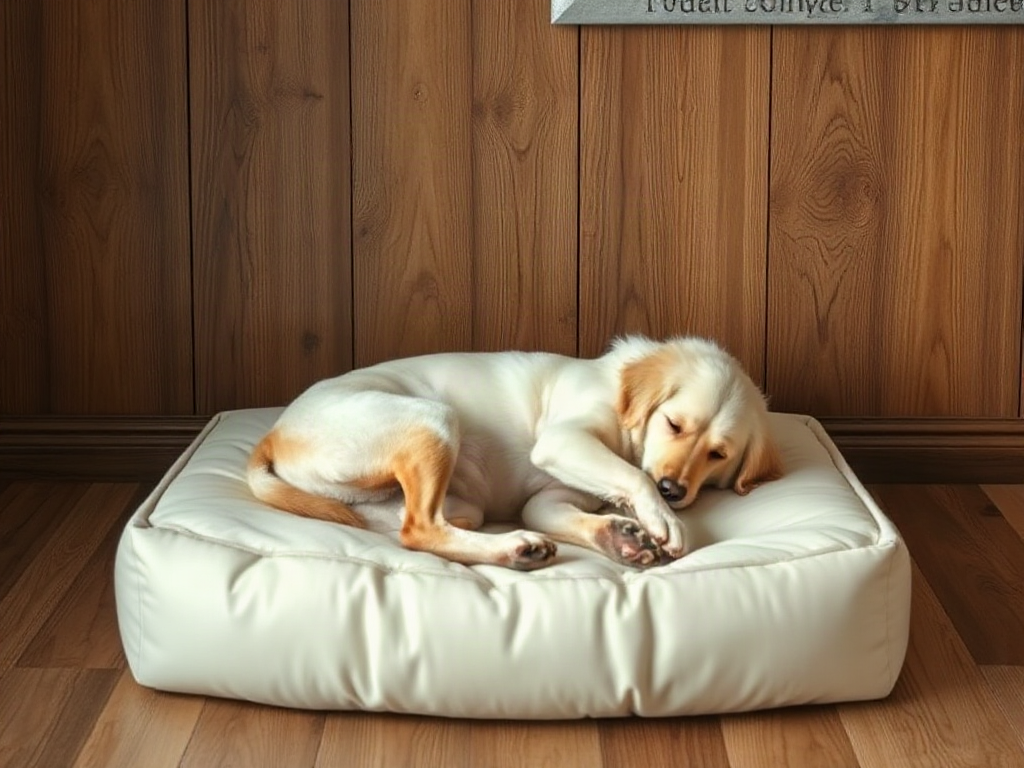
Choose pet bed dimensions from the space your pet occupies in its usual sleeping position, not from body weight or breed alone. Measure a stretched sleeper from nose to rump or extended paws, a curled sleeper across the widest part of the curl, and a sprawler at both maximum length and width, then add enough room for natural repositioning. Raised bolsters reduce usable sleep space, so compare your measurements with the inner surface rather than the product’s outside dimensions. Observe several naps before buying because pets may curl when cold, stretch when warm, or change posture when joint stiffness, room temperature, or household activity changes.
How Does Sleeping Position Change Bed Size?
A pet’s resting footprint is more useful than a generic size label because posture determines how much of the sleep surface is actually occupied. Two pets with similar body weights can need noticeably different dimensions: one may sleep in a compact curl, while the other extends its legs behind the body or rolls onto its side. Labels such as small, medium, and large do not capture that difference, and their dimensions are not standardized between manufacturers.
Curled sleepers form a roughly circular or oval footprint. They often appreciate a bed that lets the back contact a bolster, but the center still needs enough width for the shoulders, hips, and paws without compression. A bed that fits only the tightest curl may become restrictive when the pet loosens its posture during deeper sleep. Measure the relaxed curl rather than the smallest ball the animal can form.
Side sleepers and pets that extend forward or backward need length first. A small dog that measures modestly from shoulder to rump may occupy much more space once its neck, tail, and legs relax. For this posture, a rectangular mattress or a low-sided oval often preserves more usable length than a thick donut bed with the same advertised exterior measurement. The useful comparison is not shape alone, but whether the central area accommodates the pet’s full resting line.
Sprawlers require both length and width. Some lie diagonally, rotate during a nap, or alternate between their back and side. A narrow bed may technically match their body length yet leave legs on the floor. If the pet repeatedly sleeps across the bed rather than along it, the width is probably too limited or the shape does not match the preferred orientation.
Posture can change with temperature and context. A pet may curl tightly in a cool room, stretch across a mat near a sunny window, or sleep more compactly when seeking security. Older pets or animals with mobility limitations may also avoid tight turns and high bolsters. Do not treat one photograph or one brief nap as conclusive. Watch several full rest periods in the location where the new bed will be used, noting the largest comfortable footprint rather than the posture that requires the least space.
How Should You Measure Your Pet While Resting?
Measure during a normal nap without repositioning the pet. Moving the head, straightening the legs, or encouraging a particular pose produces a theoretical dimension rather than a true resting footprint. A soft measuring tape is convenient, although a piece of string can be marked and checked against a ruler if the tape disturbs the animal.
For a curled sleeper, record the widest distance across the body and the longest distance from the outer edge of the head or muzzle to the outer edge of the hindquarters. For a side sleeper, measure from the forwardmost relaxed point to the rearwardmost point, including naturally extended paws when they regularly remain extended. Then record the depth from the back to the ends of the legs. For a sprawler, take the maximum length and width, even if the body lies diagonally.
| Observed Position | Primary Measurement | Secondary Check | Likely Bed Shape |
|---|---|---|---|
| Tight or relaxed curl | Widest diameter of the curl | Length of the relaxed oval | Round, oval, or bolstered |
| Side sleeping | Nose or front paws to rear paws | Back-to-paw width | Rectangular or low-sided oval |
| Belly sleeping | Front-to-rear extension | Elbow-to-elbow width | Flat rectangular mattress |
| Back sleeping or sprawling | Maximum overall length | Maximum leg spread | Wide mat or roomy mattress |
Repeat the measurement on more than one day and use the largest normal result. The aim is not to capture an unusual stretch made while waking, but to account for routine changes during sleep. Marking the measured length and width on the floor with removable tape can make the dimensions easier to visualize. Place the pet’s current blanket inside the outline and observe whether the animal settles naturally or consistently extends beyond it.
Add a modest comfort margin after establishing the resting footprint. The margin should permit turning, posture changes, and slight measuring error without making the sleeping area so open that a security-seeking pet rejects it. The appropriate allowance cannot be reduced to one universal number because it varies with body size, bed construction, and posture. A few inches may be meaningful for a very small animal, while a larger pet needs proportionally more room.
A common mistake is measuring a standing pet from nose to tail tip. Tails may curl, tuck, or hang outside a bed without affecting torso support, while extended paws can matter greatly. Prioritize the body parts that remain load-bearing during sleep: head, neck, torso, hips, and the usual position of the limbs. If mobility or pain appears to influence posture, bed selection should complement, not replace, advice from a veterinarian.
Usable Sleep Area Versus Outer Dimensions
Product dimensions often describe the bed’s outside edge, but the interior sleep surface determines fit. Thick bolsters, sloped walls, deep seams, and padded rims can remove several inches from each direction. A round bed listed at a seemingly suitable diameter may provide a much smaller central cushion once the raised ring is excluded.
Look for separate interior and exterior measurements in the product specifications. If only exterior dimensions are shown, examine construction photos and estimate how much width the sides consume. Removable cushions can also sit above a narrow base, causing the center to dome or slope toward the rim. That shape may suit a pet that nests into a curl, but it can reduce stable support for a side sleeper whose torso crosses the raised center.
Flat mats make dimension comparisons relatively simple because nearly the entire surface is usable. Bolstered beds trade some usable area for edge contact and head support. Covered caves and hooded beds impose another constraint: the opening and interior height must allow the pet to enter, turn, and settle without crouching awkwardly. For these designs, floor length alone is not enough. Check entrance width, interior height, and whether the roof collapses onto the resting area.
Foam behavior matters as well. Very soft fill can compress near an edge and encourage the body to slide outward, while a structured foam base generally retains its stated footprint. A thick cover seam or raised waterproof liner can create a boundary that a small pet avoids. These details do not automatically make one design better; they change how the published dimensions translate into real space.
Before ordering, use a simple fit check:
- Record the largest normal sleep footprint. Include the position used most often and the roomiest position used regularly.
- Find the interior dimensions. Do not substitute the shipping-box size or the full outside measurement.
- Account for edges and openings. Deduct bolsters from the center and check access dimensions on covered models.
- Map the usable area at home. Outline it on the floor or cardboard and watch how the pet settles.
- Check the return conditions. A washable cover does not necessarily mean a used bed can be returned.
Failure usually shows up as avoidance, constant repositioning, or predictable body overhang. Occasional paws outside the edge do not prove the bed is undersized if the torso and joints remain supported and the pet chooses that posture. Repeatedly moving to the floor, curling more tightly than usual, or abandoning the bed after trying to turn provides stronger evidence that the usable area or shape is wrong.
What Should You Do When Your Pet Falls Between Sizes?
Choose between adjacent sizes by prioritizing the pet’s least compact regular posture and the bed’s true interior area. Sizing up is generally more practical for side sleepers, sprawlers, pets that rotate frequently, and shared beds. Staying closer to the measured footprint may work for a dedicated curler that actively seeks contact with raised sides, provided the animal can still uncurl and turn without climbing over the rim.
Room constraints can complicate that decision. A larger bed that blocks a walkway or cannot sit flat against the wall may be less usable than a smaller design with a more efficient shape. When floor area is limited, compare a thick round bolster with a rectangular mattress. The rectangle may offer greater body support within the same corner because it does not sacrifice as much surface area to a padded perimeter.
Consider where the pet chooses to sleep now. A pet that regularly presses against a sofa arm may value a single supportive edge rather than an enclosed ring. One that stretches along a hallway wall may prefer a long mattress with a low side. If the current bed is rejected, compare the pet’s floor posture with the bed’s interior outline. That observation can reveal whether the problem is length, width, rim height, warmth, instability, or location rather than overall size.
Shared sleeping requires measuring the animals together, not adding two individual body lengths. Pets may overlap when curled but separate as they warm up, and one may occupy the center while the other is pushed onto a bolster. Observe their widest routine arrangement and make sure both torsos can rest on the supportive surface. A single larger bed may work for bonded pets that consistently choose contact; two beds placed side by side give each animal more control and may suit pairs with different postures.
Allow for foreseeable changes without buying an impractically oversized bed. A growing young pet may need an interim washable mat before an adult-size bed makes sense. A senior pet may benefit from a lower entrance and a roomier turning area even if its body dimensions have not changed. Weight gain should not be assumed or planned around, but changes in flexibility and gait can alter the space needed to settle comfortably.
Fit is working when the pet enters without hesitation, turns without catching a limb on the rim, rests the torso fully on the cushion, and alternates between normal positions without being forced off the edge. If the larger option feels too exposed, a blanket or partial bolster can add containment without shrinking the supportive base. That is usually a better compromise than selecting a bed whose center fits only the pet’s most tightly curled posture.
Frequently Asked Questions
Should a pet bed be larger than the pet?
Yes, it should exceed the pet’s normal resting footprint enough to allow turning and posture changes. Compare that footprint with the interior sleep surface, not the outside edge.
Should I include the tail when measuring?
Include the tail only when it routinely lies straight and supported during sleep. Prioritize the torso, head, hips, and naturally extended legs rather than a tail that usually curls or hangs over an edge.
Is a round bed suitable for a pet that sleeps stretched out?
A round bed can work if its interior diameter accommodates the full stretched posture, but a rectangular mattress usually uses floor space more efficiently for long side sleepers.
How can I tell if the current bed is too small?
Consistent torso overhang, restricted turning, unusually tight curling, repeated repositioning, or leaving for a roomier floor area can indicate inadequate usable space.
Can two pets share one bed?
They can if both choose to sleep together and the supportive interior holds their widest routine arrangement. Two adjacent beds are more flexible when their preferred positions or comfort needs differ.
Conclusion
Bed fit becomes much easier to judge when the purchase is based on observed sleep behavior rather than weight labels. Record the largest position your pet uses routinely, map its length and width, and compare those measurements with the product’s interior surface. Give extra attention to bolsters, covered entrances, sloped cushions, and other features that reduce usable room.
When two sizes appear workable, favor the option that supports an extended torso and permits an easy turn, unless a dedicated curler clearly prefers closer edge contact. Outline the proposed sleep area at home before ordering and watch several naps rather than relying on a single pose. After the bed arrives, look for relaxed position changes, full torso support, and voluntary repeat use. Persistent overhang or avoidance is a reason to reconsider the dimensions, shape, firmness, or placement.