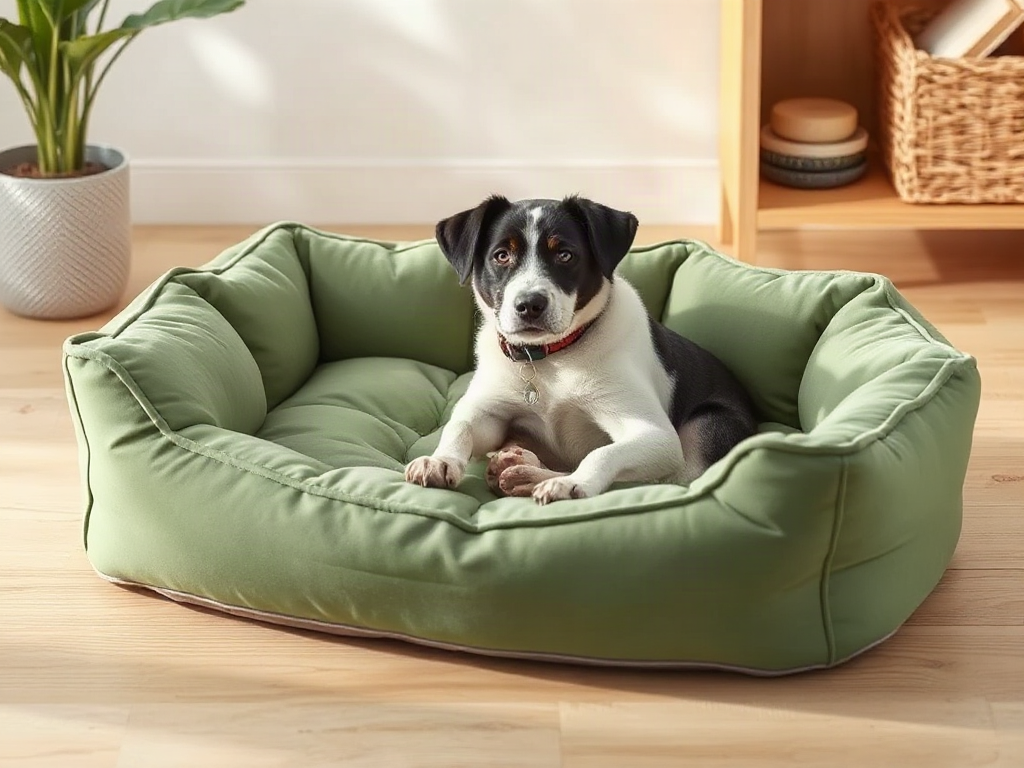
Calming pet bed shapes for anxious sleepers work best when they provide gentle body contact, a protected resting edge, and enough interior room to change position without feeling exposed. Donut and oval bolster beds suit pets that curl tightly, while cave beds offer overhead cover for habitual burrowers and three-sided bolsters preserve a clear exit for watchful sleepers. Shape must be matched to sleeping posture, mobility, body length, and temperature tolerance rather than chosen for appearance alone. Avoid cramped openings, unstable walls, and deep centers that make entry difficult or trap heat.
How Does Bed Shape Affect an Anxious Pet’s Sleep?
Bed shape changes how much physical enclosure a pet experiences while resting. Raised rims can create contact along the back and provide a place to brace the chin, while a hood or deep side wall reduces open sightlines. A flat mat provides neither feature, but it gives a pet unrestricted movement and an immediate exit. The useful shape is therefore the one that balances shelter with the animal’s need to monitor and leave the resting area.
Body contact may help some pets settle because the edges define a consistent resting space. A small dog that circles and curls against a sofa cushion may readily use a round bolster with a soft inner wall. A rabbit that prefers lying beneath a low table may be more interested in a bed with overhead cover. By contrast, a cat that sleeps stretched across an open shelf may reject a tightly enclosed cave even if the interior is soft.
More enclosure is not automatically more calming. Deep donut centers can restrict leg extension, tall walls can block a small pet’s view, and enclosed beds can hold warmth. An animal that wants visual control of the room may become less comfortable when the only opening faces a wall or busy walkway. The common mistake is treating anxiety as a universal preference for hiding. Some anxious sleepers seek cover; others choose an open position from which they can watch doors, people, or other animals.
Placement can also change how a shape functions. A three-sided bolster against a quiet wall gives back protection while leaving the front open. The same bed placed in the center of a room may feel exposed despite its raised edges. A covered bed near noisy appliances may offer visual concealment without reducing vibration or sudden sound. Shape should be considered alongside foot traffic, temperature, household noise, and access to familiar resting areas.
Watch what the pet already does before selecting a design. Notice whether the animal curls, sprawls, burrows, leans against objects, elevates the chin, or repeatedly changes locations. These behaviors provide more useful evidence than a shape marketed as calming. The goal is not to force a particular sleeping posture but to provide a resting boundary that resembles the pet’s chosen pattern without compromising ventilation, movement, or escape.
Which Shape Matches Each Sleeping Position?
Sleeping posture offers the clearest starting point for comparing shapes. A curled sleeper uses a different amount of usable space than a pet lying fully extended, and a habitual burrower seeks a different type of cover than an animal that simply rests its head on an edge. Observe several naps rather than relying on one unusually cold, noisy, or active day.
| Observed sleep preference | Shape to consider | Primary tradeoff |
|---|---|---|
| Curls into a compact circle | Round or oval donut | Deep centers may feel cramped or warm |
| Leans against furniture | Oval or rectangular bolster | Soft walls may collapse under body weight |
| Burrows under blankets | Cave, hooded bed, or sleep sack | Requires ventilation and an accessible opening |
| Watches the room while resting | Three-sided bolster | Orientation and placement matter |
| Stretches fully or changes position often | Low-sided oval or flat mattress | Provides less enclosure |
Round donut beds are most compatible with pets that curl and press their backs into a boundary. An oval version offers similar contact but gives the spine more lengthwise room. If a small dog alternates between curling and lying on its side, an oval bolster is usually less restrictive than a perfectly circular center. The surrounding rim should yield under pressure rather than push the neck or spine into an awkward angle.
Cave and hooded shapes are designed for pets that actively seek overhead cover. Their value depends on the hood remaining open enough to enter without a struggle. A flimsy canopy that collapses may be welcomed by a pet accustomed to tunneling under fabric, yet it may deter an animal that dislikes material touching its face. For pets that chew bedding or become caught in loose fabric, an open bolster may be the safer practical choice.
Three-sided beds occupy the middle ground between concealment and visibility. They provide surfaces along the back and sides while preserving a broad front opening. This layout can suit an alert sleeper that wants to face the room. Position the open side toward a calm sightline rather than a doorway where people repeatedly appear. A four-sided rectangular bolster can serve a similar role when one edge is low enough for easy entry.
Flat and low-sided designs should not be dismissed simply because they look less cocooning. They often work better for pets that sprawl, overheat easily, have limited mobility, or dislike stepping over a rim. If some boundary is preferred, place a low bolster against a wall instead of buying a deeply recessed bed. The strongest choice follows the pet’s posture and movement, not the shape with the most padding.
How Should You Check Size, Entry, and Support?
Usable interior dimensions matter more than the bed’s outside measurements. Thick bolsters can consume a large portion of the advertised footprint, leaving a surprisingly small sleeping area. Measure the pet in its usual relaxed position, then compare that length and width with the flat interior surface rather than measuring across the outer edges.
For a curled sleeper, the center should accommodate the natural circle without forcing the nose tightly into the tail or lifting the body onto the rim. For a side sleeper, check from nose to the base of the tail and account for extended legs. A bed does not need excessive empty space, but the pet should be able to turn around and shift from curled to partially extended. If the animal repeatedly hangs its hips over the edge, sleeps on top of the bolster, or abandons the bed after repositioning, the interior may be too small.
Entry height deserves equal attention. Puppies, older animals, short-legged breeds, and pets with mobility limitations may hesitate at a high perimeter even when the center is comfortable. A lowered front opening reduces the step while keeping supportive edges elsewhere. Beds that roll, tip, or slide during entry can create another barrier, particularly on smooth flooring. A stable base and a non-slip underside may matter more than a taller, more enclosing wall.
Use this compact shape checklist before buying or keeping a bed:
- Interior fit: The pet can curl, turn, and reposition without riding on the rim.
- Exit access: At least one opening remains easy to reach and unobstructed.
- Wall behavior: Bolsters support leaning without collapsing over the sleeper.
- Temperature: The shape and fabric do not create persistent heat avoidance.
- Base stability: The bed stays flat and does not skid during entry.
- Maintenance: Covers, seams, and enclosed areas can be inspected and cleaned.
Support should be judged by what happens under the pet’s weight. An overfilled rim may feel hard rather than reassuring, while a loosely filled edge may flatten immediately. The center also needs enough cushioning to prevent the pet from sinking onto the floor, but deeper is not always better. Very soft centers can make standing and turning harder for animals with reduced strength or balance.
Inspect enclosed and heavily padded shapes regularly. Loose foam, exposed stuffing, damaged zippers, and chewed seams require prompt attention because swallowed material or entanglement can be hazardous. Persistent nighttime pacing, vocalizing, panting unrelated to heat, sudden sleep changes, or difficulty lying down should not be assumed to be a bed-shape problem. Those signs warrant discussion with a veterinarian, especially when they appear abruptly or accompany pain, appetite changes, or altered behavior.
How to Test a New Bed Shape Without Creating Pressure
A new bed should be introduced as an optional resting place rather than a location the pet is repeatedly placed into. Set it near an existing favored sleep area, keep the entrance clear, and allow voluntary investigation. Forced placement can make a cautious animal associate the unfamiliar shape with restraint, particularly when the bed has high walls or a narrow opening.
Transfer familiar scent without adding unsafe clutter. A washable cover or familiar blanket can make the surface more recognizable, provided the pet does not chew or become tangled in loose textiles. Avoid strongly scented detergents, sprays, or fragrance products during the trial. The pet’s own bedding scent is generally a more relevant cue than a product marketed with an added calming odor.
Evaluate use across several ordinary rest periods. Brief sniffing is not evidence of acceptance, and one nap after vigorous exercise does not establish a preference. More useful signs include entering without coaxing, circling once or twice and settling, maintaining a loose posture, and returning to the bed at different times. Frequent entry followed by immediate departure may indicate excess warmth, unstable footing, a cramped center, or a location with too much activity.
Change one variable at a time when the bed is avoided. First rotate an open-sided bed so the pet can see the room. Next try moving it beside a wall or away from a vent, television, or busy doorway. If location changes do not help, alter the degree of enclosure: prop open a collapsible hood, remove a loose blanket, or compare the bed with a lower-sided alternative. Simultaneously changing shape, room, fabric, and scent makes it difficult to identify the source of discomfort.
A practical comparison can use two safe options already available in the home. For example, place an oval bolster and a flat mat in equally quiet positions, then note which one the pet chooses when sleepy rather than when prompted. A pet may use the bolster on cool nights and the mat in warm conditions, showing that no single shape is ideal year-round. Seasonal changes are especially relevant to cave beds and deep faux-fur donuts, which tend to retain more warmth than open, low-profile surfaces.
Stop the trial if the pet chews the structure, becomes trapped beneath a folding hood, struggles to step out, or appears more vigilant inside it. A calming shape should make rest easier to initiate, not merely keep the animal physically contained. When anxiety affects daily functioning or sleep despite a quiet environment and suitable resting choices, bedding is unlikely to address the full cause. A veterinarian or qualified behavior professional can help assess pain, noise sensitivity, separation-related distress, or other contributing problems.
Frequently Asked Questions
Are round beds always best for anxious pets?
No. Round beds suit tight curlers, but pets that sprawl, monitor the room, or struggle with deep rims may prefer an oval bolster, three-sided design, or flat mattress.
Can a calming bed be too enclosed?
Yes. A narrow entrance, poor airflow, blocked sightlines, or a collapsing hood may make an enclosed bed uncomfortable. The pet should be able to enter, turn, and leave freely.
Why does my pet sleep beside a new bed instead of inside it?
The center may be too warm, soft, small, unstable, or unfamiliar. Try a quieter location and familiar cover before concluding that the pet dislikes every bed of that shape.
Should a calming bed have high sides?
Raised sides can provide leaning support, but height should not obstruct entry or visibility. A low front with firmer side and back bolsters offers a useful compromise.
How do I know whether the new shape is working?
Look for voluntary return visits, easy settling, relaxed repositioning, and sustained rest. Repeated hesitation, overheating, edge sleeping, or immediate exits suggest a poor fit or placement.
Conclusion
Choose a bed by reading the pet’s existing sleep behavior rather than relying on a calming label. Curlers often benefit from round or oval bolsters, burrowers may accept a ventilated cave, and alert sleepers may prefer a three-sided bed with an open view. Interior space, entry height, stable footing, and temperature are as consequential as the outline itself.
Measure the usable center, place the bed in a quiet but accessible location, and let the pet investigate without being confined. Then assess repeated choices across normal naps and different temperatures. Adjust orientation and location before replacing the bed, but move to a less enclosed shape if the pet appears trapped, hot, or reluctant to enter. Bedding may support comfortable rest; persistent or sudden anxiety-related behavior requires attention beyond bed design.