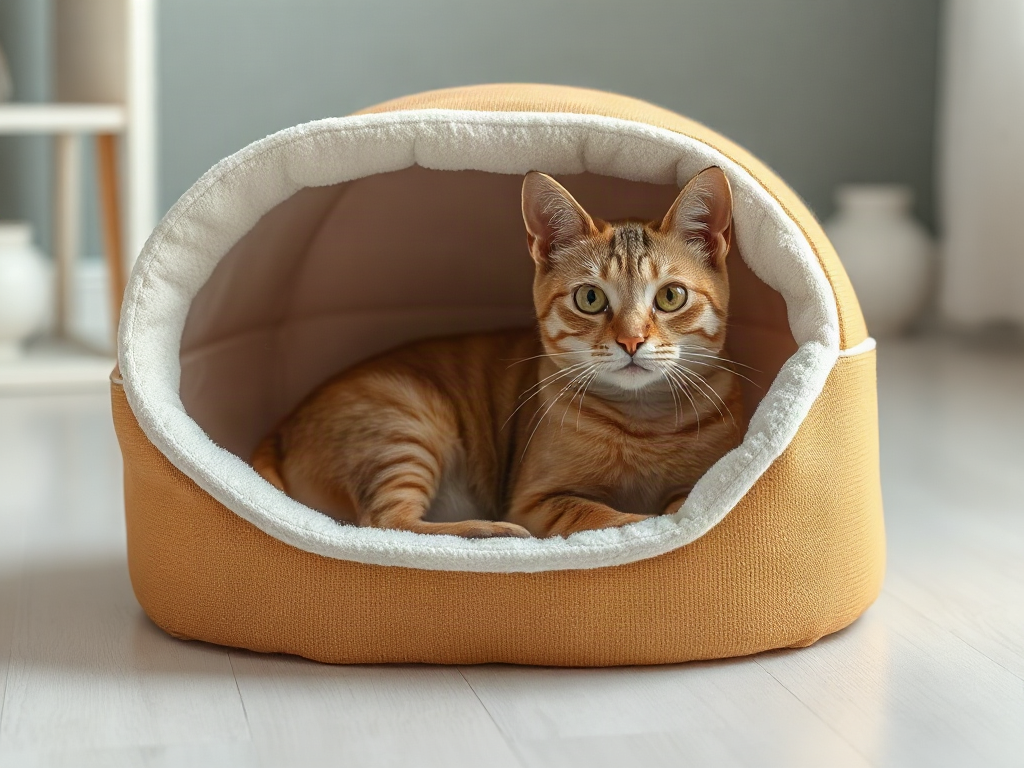
Cat pet beds for enclosed sleeping work best when the interior fits a curled body without crowding, the entrance allows easy movement, and the structure remains stable during entry and turning. Choose breathable, washable materials and inspect enclosed beds for trapped heat, loose filling, collapsed walls, and obstructed exits. A cautious cat may accept a cave-style bed more readily when it is placed in a quiet, familiar location with the opening facing the room. Prioritize usable interior dimensions over exterior size, and treat persistent avoidance, panting, stiffness, or difficulty entering as signs that the design or placement is unsuitable.
Why Do Enclosed Beds Appeal to Some Cats?
An enclosed bed gives a cat a defined resting boundary, reduced exposure on several sides, and a sheltered position from which to watch nearby activity. Those features often appeal to cats that already nap inside cardboard boxes, under chairs, between pillows, or beneath loosely draped blankets. The enclosure does not automatically make a bed comfortable, however. A cat may reject a covered design if it blocks the view, holds too much heat, shifts underfoot, or has an entrance that feels difficult to cross.
Sleeping behavior is more useful than assumptions about personality. A social cat may still prefer a concealed daytime nap, while a cautious cat may choose an open perch because it provides several escape directions. Observe where the cat sleeps when equally accessible options are available. Repeated use of narrow, roofed spaces suggests that a cave, pod, tent, or hooded cushion may be worth trying. Stretching across a sofa or choosing elevated platforms points toward an open bed instead.
The degree of enclosure matters as much as the general style. A soft hood that remains wide open preserves visibility and may suit a cat testing covered bedding for the first time. A rigid pod creates a more defined interior and resists collapse, but it is less forgiving if the opening or sleeping area is too small. Fabric caves are often easy to move and store, although weak walls can fold inward and reduce the usable space. A removable blanket canopy offers flexibility but needs regular checking so loose fabric does not cover the entrance.
Household context can change the choice. In a home with another cat, dog, or active child, a single narrow opening may leave the sleeper feeling cornered if approached. Positioning the entrance toward an open room can help, but some cats still prefer an open-sided bed that allows faster departure. Senior cats and cats with limited mobility may struggle with a high lip or low roof even when they like sheltered locations. Any sudden change in sleeping preference accompanied by stiffness, hiding, appetite changes, or unusual behavior warrants discussion with a veterinarian rather than being treated solely as a bedding problem.
A common mistake is buying the most heavily enclosed model because it appears coziest to a person. The better starting point is the cat’s demonstrated preference. Offer the enclosed bed without removing an accepted sleeping option, then compare voluntary use over time. Consistent relaxed naps, easy entry, normal turning, and unhurried exits indicate a workable match; repeated sniffing followed by retreat suggests that fit, odor, stability, or placement needs attention.
How Should You Measure Interior Fit and Entrance Access?
Usable interior space determines fit more accurately than a product’s outside width. Thick walls, bolsters, sloping roofs, and padded liners can take away several centimeters of sleeping room, so two beds with similar exterior dimensions may feel very different inside. Measure the cat’s approximate length and width while comfortably curled, then compare those measurements with the interior floor. The cat should be able to enter, turn, settle, and reposition without pressing tightly against every surface.
A snug sleeping boundary is different from crowding. Many cats curl against a soft side, but they still need room to adjust their head and limbs. If a tail or paws routinely remain outside, the roof touches the cat while resting, or turning requires backing out, the enclosure is probably undersized. Buying a dramatically oversized cave is not always the solution. A large shell may lose the close-sided quality the cat seeks, and a broad unsupported roof may sag into the sleeping area.
The entrance should be assessed in relation to the individual cat rather than by a generic size label. Check both width and height, including any soft border that folds inward. A young, agile cat may step over a padded threshold comfortably, while a senior cat may benefit from a low, broad opening. Large-bodied cats need clearance at the shoulders, not merely enough space for the head. Cats with long coats also need extra room because dense fur can brush the sides and make a technically adequate opening feel restrictive.
| Fit Check | Suitable Sign | Warning Sign |
|---|---|---|
| Interior floor | Cat can curl and change position | Body is compressed or limbs remain outside |
| Entrance | Shoulders pass without rubbing | Cat crouches sharply or hesitates at the rim |
| Threshold | Easy step in and out | Paws catch or the cat climbs awkwardly |
| Roof clearance | Cover stays above the resting body | Top sags onto the cat |
Measure the actual space after the liner is installed because removable cushions can raise the floor and reduce roof clearance. Press the base as it would compress under the cat’s weight, and check whether the entrance deforms when the bed sits on carpet. Product photos can obscure these effects, especially when a small model cat or an unfilled shell is shown.
The most useful pre-purchase checklist is short: confirm internal floor dimensions, entrance width and height, threshold depth, roof clearance, and the manufacturer’s stated size or weight limits when available. Keep the packaging until the cat has inspected the bed under normal household conditions. If the cat repeatedly chooses an adjacent box or open cushion, do not assume stubbornness; compare the competing spaces for temperature, visibility, footing, and entry effort.
Which Materials, Airflow, and Structures Work Best?
Material choice affects temperature, footing, odor retention, cleaning, and whether the enclosure keeps its intended shape. Plush and fleece-like linings feel soft and hold warmth, which can suit a cool room, but deep pile may be uncomfortable in warm weather and can trap hair or debris. Smoother woven fabrics are often easier to vacuum and may feel less hot. A removable washable liner is more practical than a permanently attached cushion when shedding, hairballs, or occasional accidents are realistic concerns.
Air exchange deserves special attention because covered beds retain more warmth than open cushions. The entrance is usually the primary ventilation point, so it should remain unobstructed when the bed is occupied. Thin fabric walls generally release heat more readily than thick foam shells, while rigid felted or molded pods may stay warmer. Room temperature, sunlight, nearby heating vents, and the cat’s coat all influence the result. Panting, restless repositioning, leaving shortly after entry, or consistently sleeping halfway outside can indicate excessive warmth; panting in a cat can also signal a health concern and should not be dismissed if it is unexplained or persistent.
Structure creates a separate tradeoff. A rigid shell preserves the doorway and offers predictable clearance, but it occupies more storage space and may be harder to wash. A collapsible cave is lighter and easier to clean or pack, yet weak seams and thin side panels can buckle during entry. Press gently on the roof and doorway before use. The opening should return to shape, the base should remain flat, and normal movement should not roll or tip the bed.
Inspect construction from the cat’s perspective. Loose threads, accessible foam, exposed fasteners, detachable decorations, and torn seams invite chewing or claw snagging. Non-slip backing is useful on tile or wood, provided it remains intact after washing. Strong fragrance can deter use, whether it comes from manufacturing residue, scented detergent, or household spray. Air out a new bed as directed by its care label and use a mild, cat-compatible cleaning approach rather than masking odor with perfume.
Cleaning claims should match the full product, not merely the small insert. A machine-washable cushion inside a shell that cannot be wiped effectively may not be enough for a cat prone to accidents. Check whether the cover unzips, whether inner foam must be removed, and how the structure dries. Damp padding can retain odor and lose shape. Before returning a washed bed, make sure every layer is fully dry and the walls, zipper areas, and floor remain sound.
A frequent purchasing error is prioritizing softness over maintainability. The better balance is a comfortable liner, an entrance that stays open, a stable floor, and surfaces that can be cleaned according to the label. Replace the bed if exposed filling, persistent odor, broken support, or a distorted doorway cannot be corrected safely.
How Should You Place and Introduce an Enclosed Bed?
Placement often determines whether a well-fitted bed is used. Cats commonly choose resting areas that combine low disturbance with awareness of nearby movement. Put the enclosure close to an existing nap location rather than selecting an isolated corner solely because it looks tidy. Face the opening toward the room, doorway, or familiar travel path so the cat can see what is approaching. Avoid busy hallways, vibrating appliances, cold drafts, direct afternoon sun, and places where another animal can block the exit.
Elevation can make a sheltered bed more appealing, but only when the supporting surface is broad, level, and secure. A bed on a wide bench or sturdy low platform may offer visibility without excessive exposure. A narrow shelf, unstable table, or soft sofa back can allow the enclosure to slide or tip. Floor placement is usually simpler for kittens, senior cats, and cats that hesitate to jump. Where household dogs investigate cat beds, a calm cat-only room or safely accessible raised location may be more suitable than a deeper enclosure at floor level.
Introduction should preserve choice. Set up the bed, hold the entrance in its intended shape, and allow the cat to investigate without being placed inside. A familiar, clean cloth carrying the cat’s own scent may make the interior less novel, provided it does not bunch up or reduce the exit. Treats can be placed near the opening for a cat that is comfortable taking them, but pushing food deep inside may pressure a hesitant cat to enter a space it has not assessed.
A practical introduction sequence is:
- Place the bed near a current resting area with the entrance fully visible.
- Remove tags, packaging, and detachable items, then verify that the base does not slide.
- Leave the bed undisturbed while retaining the cat’s usual sleeping choices.
- Watch for voluntary sniffing, stepping inside, turning, grooming, and relaxed sleep.
- If the bed is ignored, change one variable at a time: orientation, location, liner thickness, or degree of enclosure.
Changing one factor prevents guesswork. For example, if a cat enters only when the soft roof is folded back, the issue may be overhead pressure or visibility rather than the location. If the cat uses the cave at night but avoids it during sunny afternoons, heat may be the limiting factor. If entry stops after washing, detergent scent, altered padding, or incomplete drying may explain the change.
Forcing the cat inside is the most common introduction failure. Restraining a cat in a single-exit space can create a negative association and does not show whether the bed is genuinely comfortable. Success looks voluntary: the cat approaches without coaxing, enters smoothly, settles with loose posture, and leaves without scrambling. If those signs do not appear after reasonable placement adjustments, an open bolster, flat mat, or partially covered bed may simply be the better design.
Frequently Asked Questions
Do cats prefer enclosed beds to open beds?
Some cats seek covered retreats, while others prefer an open cushion with a clear view. Sleeping habits offer the best clue: cats that regularly use boxes, covered chairs, or blanket tunnels are stronger candidates for an enclosed bed.
How large should an enclosed cat bed be?
The interior should accommodate the cat's normal curled posture and allow turning without compression. Measure the cat while resting, then compare that footprint with the bed's internal dimensions rather than relying on exterior width.
Where should a cave-style cat bed be placed?
Choose a quiet, dry location away from busy walkways, drafts, direct sun, and noisy appliances. Face the entrance toward the room or a familiar route so the cat can monitor activity from inside.
How can I encourage my cat to use an enclosed bed?
Place the bed near an established sleeping area, keep the entrance open, and add a familiar washable cloth if safe. Avoid putting the cat inside or blocking the exit, because forced exposure can create avoidance.
When should an enclosed cat bed be replaced?
Replace it when the walls no longer stay open, the base slides or sags, seams expose filling, odors persist after cleaning, or the entrance becomes distorted. Structural damage matters even if the outer fabric still looks acceptable.
Conclusion
A useful enclosed sleeping space matches the cat’s existing habits rather than a person’s idea of coziness. Check the internal floor, doorway, threshold, and roof clearance with the liner installed, then compare those details with how the cat naturally curls and moves. Favor stable construction, an unobstructed opening, manageable warmth, and washable surfaces over decorative features.
Place the bed where the cat already feels comfortable, keep the entrance facing a visible route, and allow exploration without confinement. Voluntary entry, easy turning, relaxed sleep, and calm exits show that the setup is working. Persistent hesitation, partial entry, overheating, collapse, or awkward movement calls for a fit or placement change. If adjustments do not help, keep an open-bed alternative available; enclosed sleeping is a preference, not a requirement.