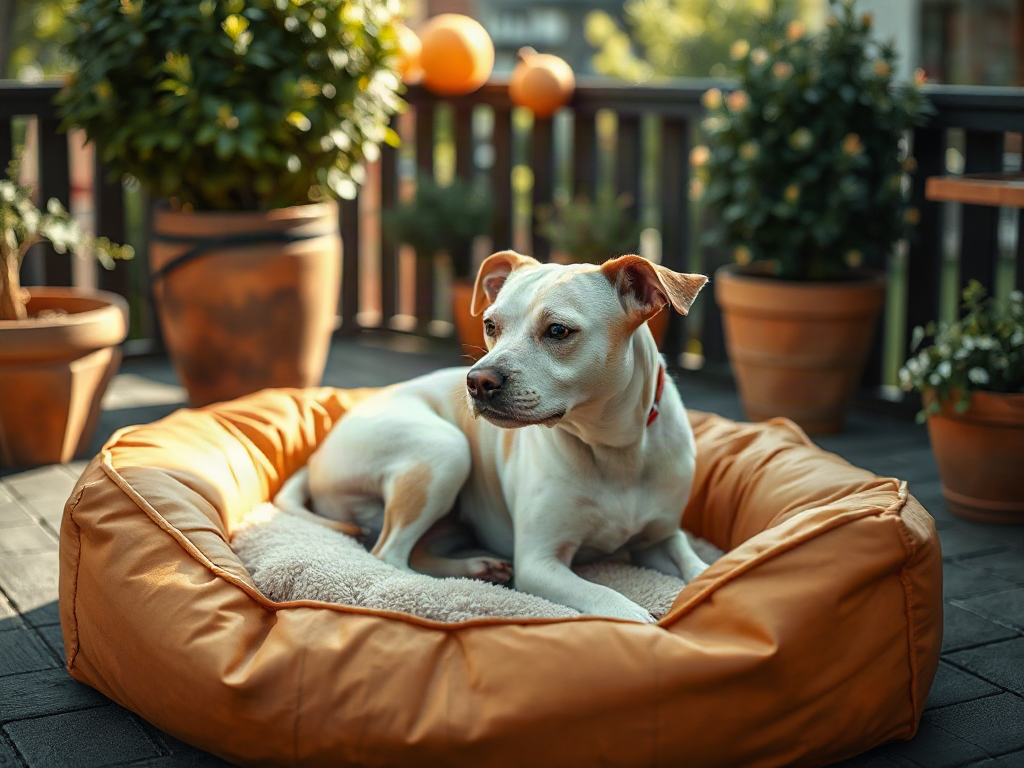
Outdoor pet bed materials for changing weather work best when they combine a solution-dyed synthetic cover, quick-draining support, raised airflow, and corrosion-resistant hardware. Polyester or acrylic fabric handles sun and intermittent rain better than absorbent cotton, while open-weave mesh or reticulated foam releases water instead of trapping it. A water-resistant coating is useful, but sealed construction can still hold moisture at seams and inside dense filling. Choose the material stack for the bed’s exposure, inspect hidden surfaces after storms, and bring it under cover during prolonged rain, freezing conditions, or severe heat.
Which Outer Fabrics Handle Sun and Rain?
The outer cover takes the first hit from ultraviolet light, rain, dirt, claws, and repeated cleaning. For an exposed patio or deck, tightly woven synthetic fabric is generally more practical than cotton or other absorbent natural fibers. Polyester dries relatively quickly and is widely available, while solution-dyed acrylic is valued where sustained sun exposure is a major concern. Olefin, also called polypropylene, resists moisture uptake and can suit damp locations, although texture and weave quality vary between products.
Fiber name alone does not predict field performance. A loosely woven polyester cover may snag or admit water faster than a dense, well-finished fabric made from the same polymer. Color treatment matters as well: solution-dyed fibers carry color through the fiber rather than relying only on a surface application, which makes them a sensible choice for a bed that receives direct afternoon sun. Dark surfaces may hide stains but can become uncomfortably hot in sunlight; very pale covers show soil sooner but often absorb less solar heat.
Water resistance and waterproofing are not interchangeable. A water-resistant finish causes light rain to bead temporarily, yet pressure, abrasion, aging, and detergent can reduce that effect. A waterproof laminated cover blocks more liquid through the fabric face, but water may still enter through zipper tape, needle holes, piping, or a damaged seam. Once moisture reaches an absorbent core, a highly sealed cover can slow evaporation and conceal the problem.
Consider a bed placed beneath a roof overhang. It may receive windblown drizzle and hours of sun but rarely sit in standing water. A removable, tightly woven polyester or acrylic cover over a draining interior is usually more useful there than a rigidly waterproof shell. Beside an uncovered pool, by contrast, low water absorption and rapid drying deserve greater priority because splashes are routine.
A common mistake is selecting soft indoor upholstery because it feels comfortable in the store. Cotton canvas and plush fabrics can be pleasant when dry, but they readily collect moisture, pollen, hair, and soil outdoors. Comfort should come from the bed’s support and a washable top layer, not from a cover that remains damp. Before buying, check whether the manufacturer identifies the fiber, permits machine washing, and describes the finish without treating vague phrases such as “weather friendly” as proof of all-weather durability.
What Should Go Inside an Outdoor Bed?
The interior should either avoid holding water or provide an unobstructed route for water to leave. Open-weave sling beds achieve this by suspending the animal on mesh without a thick filling. Reticulated foam uses an open cellular structure through which air and water can pass. Dense conventional foam, shredded foam, fiberfill, and batting may feel cushioned, but they dry much more slowly after water penetrates the cover.
Open mesh is usually the simplest option for variable warm weather. Air can circulate above and below the sleeping surface, loose dirt can fall through, and the material can often be rinsed. Its tradeoff is limited insulation and cushioning. Mesh tension also matters for small animals: excessive sag can make climbing out awkward, while openings, frayed edges, or exposed attachment points may catch toes or nails. The surface must be appropriately sized and safely finished for the particular species rather than assumed safe because it is sold as outdoor furniture.
Reticulated foam offers more cushioning while still draining more effectively than closed, dense upholstery foam. It needs a breathable cover and space beneath the bed, however. Placing draining foam inside a waterproof liner with no drain path defeats its main advantage. Closed-cell foam absorbs little water through intact cells and can provide modest insulation, but thick pieces may feel firm and moisture can remain trapped between the foam and its cover.
Insulated or plush inserts make sense only under controlled conditions. On a cool, dry, covered porch, a removable fleece pad can add warmth and be taken indoors each evening. Leaving that same pad outside through dew and rain creates a damp layer against the pet. In hot weather, thick cushioning also restricts heat loss, especially when the bed sits directly on a warm surface with no airflow underneath.
| Interior Material | Weather Strength | Main Limitation | Best-Fit Setting |
|---|---|---|---|
| Open-weave mesh | Fast drainage and strong airflow | Less padding and insulation | Warm, humid, or frequently wet areas |
| Reticulated foam | Drains while providing cushioning | Needs a breathable cover and open base | Covered outdoor spaces with occasional rain |
| Closed-cell foam | Low water absorption | Firmer feel and moisture at interfaces | Thin insulating layers kept under cover |
| Fiberfill or dense foam | Soft, familiar feel | Slow drying after water intrusion | Temporary outdoor use with indoor storage |
Press and smell the core during routine checks. A filling that remains cool and clammy, develops a stale odor, clumps, or fails to regain its shape is not drying adequately. Cleaning the cover alone will not correct moisture retained inside; the insert needs complete drying or replacement.
How Does Construction Affect Weather Resistance?
Construction details often determine whether good materials perform as intended. A durable cover over quick-draining foam can still fail if a recessed zipper collects water or the bed base lies flat against concrete. Drainage, ventilation, seam placement, frame stability, and replaceable components should be evaluated as one system rather than as separate product features.
Elevation creates an air gap and limits contact with puddles, damp soil, or a heat-storing deck. Powder-coated steel frames can be sturdy, but scratches may expose metal to corrosion. Aluminum does not rust like steel, although joints and fasteners still require inspection. Molded polymer frames avoid metal corrosion but may become brittle or distorted after long exposure, depending on formulation and conditions. Stainless or otherwise corrosion-resistant fasteners are preferable to untreated hardware in wet or coastal environments.
Seams should shed water rather than create channels toward the filling. Covered zippers placed on a side or underside are less exposed than an upward-facing zipper, provided the underside remains off the ground. Removable covers simplify washing and allow the core to be inspected. Replaceable mesh panels or covers also extend practical service life because sun damage usually appears in exposed fabric before a sound frame wears out.
A small bed left on balcony tiles illustrates the interaction. Even if rain stops quickly, the underside can remain wet where it touches the floor. Lifting it on a stable ventilated base allows evaporation from both faces. The improvement is not a reason to leave the bed out indefinitely: wind can move lightweight beds, low railings create placement hazards, and intense sun can make both fabric and frame too hot for use.
Use a short inspection routine after strong sun, rain, or cleaning:
- Press the surface and core: look for retained moisture, collapsed padding, or hardening.
- Check seams and attachment points: stop using the bed if mesh tears, threads loosen, or openings could catch a foot.
- Inspect the frame and floor contact: look for corrosion, sharp edges, wobble, trapped grit, and standing water.
- Test surface temperature: use your hand before allowing the pet onto a sun-exposed bed.
The common misconception is that “outdoor” means the bed can remain outside year-round without intervention. Weather-resistant materials reduce damage; they do not make accumulated moisture, temperature extremes, chewing, or structural wear harmless. A bed is working as intended when it dries fully between uses, remains stable, has no persistent odor, and shows no cracking, fraying, or exposed filling.
Choosing Materials for Your Weather Pattern
Match the complete material stack to the weather the bed actually experiences, not the most dramatic condition listed on a product label. Begin with placement: full exposure, partial cover, or temporary outdoor use. Then identify the recurring pressure—sun, frequent wetting, humidity, cold, blowing dirt, or large temperature swings. A bed optimized for one pressure may perform poorly against another.
For hot, sunny patios, prioritize shade, airflow, solution-dyed fabric, and light or medium surface colors. An elevated mesh design usually releases heat more readily than a thick foam lounger. Shade remains necessary because no fabric label guarantees a safe surface temperature. If the bed grows hot to the hand, relocate it and let it cool rather than relying on a product described as cooling.
For humid or rainy settings, choose low-absorption fabric, an open interior, exposed drain paths, and a raised base. A waterproof top over absorbent fill is a weak combination when wind-driven rain can enter through seams. After a storm, separate removable layers and dry them where air reaches every side. Persistent odor, dark spotting, or recurring dampness indicates that the location or construction is failing, even if the face fabric looks clean.
Cold, changeable weather requires a different compromise. Elevation prevents ground moisture but also allows cold air beneath the animal. A removable insulated pad can reduce that exposure in a sheltered, dry space, then be brought indoors before dew, rain, or freezing conditions. An outdoor bed should not be treated as adequate protection from harsh cold or severe weather. Species, body size, coat, age, health, and acclimation affect tolerance, so uncertainty about safe outdoor conditions warrants advice from a veterinarian familiar with the animal.
Where seasons vary sharply, modular construction is more practical than one permanently assembled bed. Use a ventilated base and durable cover in warm months, add a washable dry pad during mild cool periods, and store absorbent components indoors whenever wet weather approaches. This approach also makes failures easier to isolate: a worn cover can be replaced without discarding a sound frame.
Before purchase, apply a simple priority order. First confirm safe dimensions, stable support, and no entrapment or chewing hazards. Next evaluate drainage and drying. Then consider ultraviolet exposure, cleanability, and replacement parts. Softness and appearance come last. The most expensive material is not automatically the best; a modest removable cover that is inspected and dried routinely may outlast premium fabric wrapped around a moisture-trapping core.
Frequently Asked Questions
Is polyester suitable for an outdoor pet bed?
Polyester can suit covered or moderately exposed areas when it has a tight weave, durable finish, and removable construction. Its performance still depends on seam design, sun exposure, and whether the interior can drain.
Can memory foam be left outside?
Conventional memory foam is a poor choice for permanent exposure because water intrusion can be difficult to detect and slow to dry. Use it only in a protected bed that can be brought indoors and inspected.
Does a waterproof cover stop mildew?
No. Water may enter at seams or become trapped through condensation and incomplete drying. Ventilation, drainage, cleaning, and full drying matter alongside the cover’s water resistance.
What material is practical for a hot patio?
An elevated open-weave mesh bed under shade generally offers better airflow than thick padding. Check the surface temperature by hand because any exposed material can heat up in direct sun.
When should an outdoor bed be replaced?
Replace it when torn mesh, exposed filling, unstable joints, sharp corrosion, persistent odor, cracking, or padding that stays damp cannot be safely repaired. Stop use immediately if damage creates an entrapment or ingestion risk.
Conclusion
Material choice should follow exposure, drainage, and safe construction rather than a single “outdoor” claim. Tightly woven synthetic covers suit many patios, open mesh provides the most direct airflow, and reticulated foam adds cushioning when it has a genuine drain path. Absorbent fill, sealed seams, and floor-level placement create hidden drying problems even when the visible cover repels rain.
Inspect the intended location before buying, then favor removable components, stable elevation, protected fasteners, and surfaces appropriate for the animal’s feet and behavior. After wet or extreme weather, separate the layers and check the core, seams, frame, and underside. Move the bed into shade when surfaces heat up and indoors when prolonged rain, freezing temperatures, high winds, or severe conditions arrive. Regular handling and inspection reveal failure earlier than appearance alone.